Some trips are not about ticking places off a list. They are not measured by the number of photos clicked, places covered, or reels uploaded. They don’t come with tight itineraries or urgency. Instead, they arrive quietly asking you to slow down, listen to silence, and let time breathe. A Quiet Journey to Gokarna, is such a trip that I experienced.
In a world where even vacations are rushed, where rest is scheduled and peace is planned, such trips feel almost unfamiliar. We are so used to doing that we forget how to simply be. We move quickly, even when there is no need to. We carry noise with us, even to places meant for calm. My recent trip to Gokarna was a gentle interruption to that habit.
It wasn’t planned as an escape. It wasn’t meant to be a “break” in the traditional sense. There was no pressure to explore everything or experience it all. Somewhere along the way, this journey became about slowing down—mentally, emotionally, and physically.
Gokarna didn’t call out loudly.
It didn’t promise spectacle or excitement.
It offered something quieter: space.
Space to wake up without alarms.
Space to sit without purpose.
Space to listen—to the sea, the wind, and your own thoughts.
This trip unfolded slowly, almost deliberately. From the train journey to the choice of where to stay, from quieter beaches to unnoticed hills, everything aligned around one idea: unhurried living. There was no rush to arrive, no anxiety about what comes next.
What followed wasn’t a holiday filled with events, but a journey filled with moments—subtle, simple, and deeply grounding.
This is not a guide to Gokarna.
This is a reflection on what it feels like when travel stops demanding your attention and instead gives something back.
And perhaps, that’s where the story truly begins.
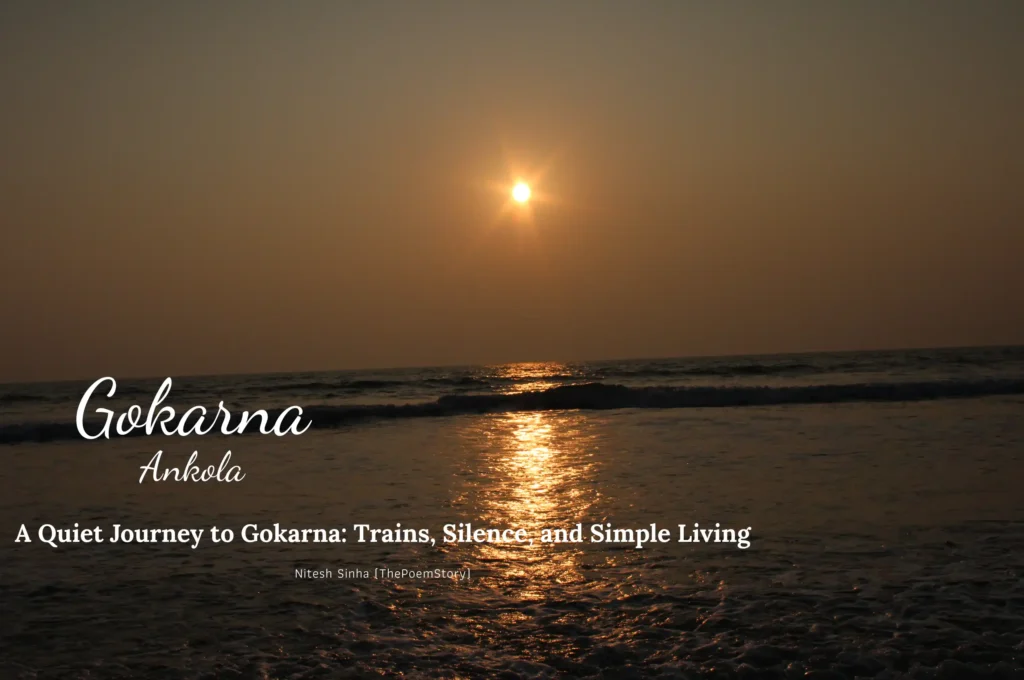
A Quiet Journey to Gokarna
The Planning: Booking Train tickets and HomeStay
While working on my computer one ordinary day, a reel appeared on my screen—almost by accident. It showed the Vistadome train coaches gliding through the lush green stretches of the Western Ghats. Wide glass windows, mist-covered hills, deep valleys, tunnels opening into sudden light—it wasn’t loud or dramatic, but it stayed with me long after the reel ended.
I went back to my work, but my mind didn’t.
I’ve already explored parts of the Eastern Ghats on a motorcycle—long roads, changing terrain, the kind of travel where movement itself becomes the experience. Somewhere deep inside, I knew the next chapter had to be different. Slower. Softer. The Western Ghats had been on my mind for a while, waiting patiently, as they always do.
There was also another long-standing wish tied to that reel—the desire to experience the Konkan Railway, often called the most beautiful railway line in India. A railway carved through mountains, rivers, forests, and coastal plains. A route where the journey is not just a means to reach a destination, but the destination itself.
That single reel felt less like entertainment and more like a nudge.
Almost instinctively, I opened the ticket booking app. There was no overthinking, no long planning. Just dates, trains, availability—and a quiet excitement building with every click. The idea of sitting inside a Vistadome coach, watching the Western Ghats unfold at their own pace, felt like the right kind of escape.
Not rushed.
Not loud.
Just honest travel.
And that’s how this journey began—not with a packed bag or a detailed plan, but with a random reel, an old wish, and the decision to finally listen to it.
The Journey Begins: Vistadome from Bengaluru
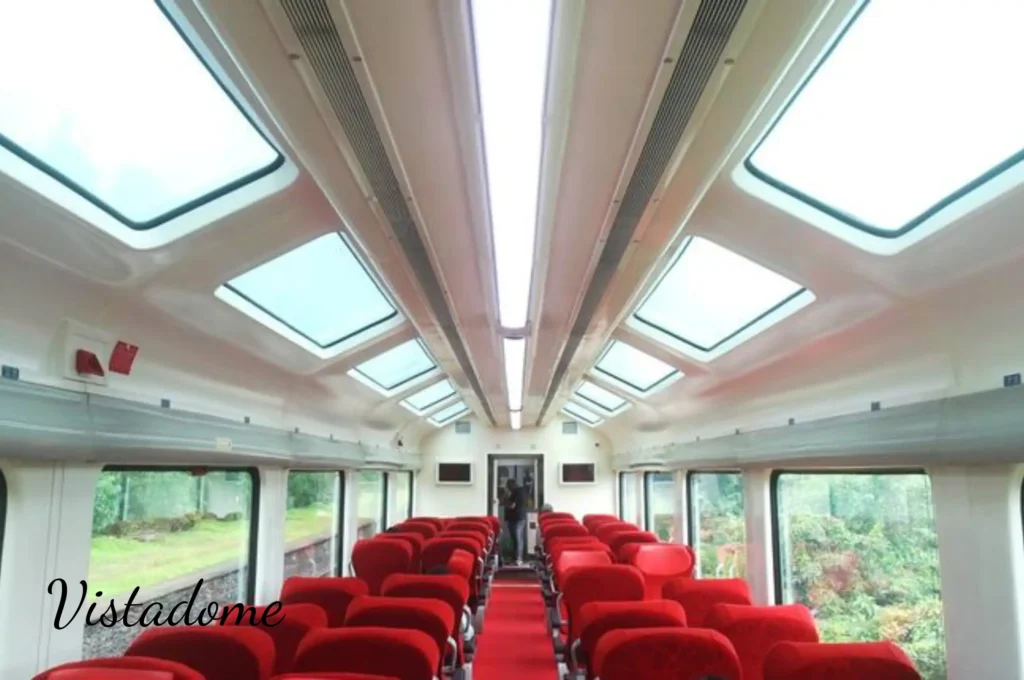
The trip began in Bengaluru, where I boarded the Vistadome coach of the Karwar Express. From the very first moment, it felt less like boarding a train and more like settling into an experience. The large glass windows weren’t just a feature—they were an invitation to slow down and observe.
If you enjoy watching landscapes change gradually—city giving way to forest, forest softening into hills—this journey feels almost meditative. Buildings thin out, signals disappear, and the outside world begins to breathe at a different pace. Somewhere along the way, the urgency of daily life quietly slips off.
The Vistadome coach changes how you travel. You’re not looking at the scenery; you’re sitting inside it. The winding tracks, repeated tunnels, and sudden openings into vast green stretches keep pulling your attention back to the present moment. There’s nothing to do but watch—and that’s exactly the point.
Where the Magic Truly Begins
The real transformation begins after Sakleshpur.
From Sakleshpur till Mangalore, the journey turns almost cinematic. The train enters the heart of the Western Ghats—curving through dense forests, crossing deep valleys, and slipping in and out of dark tunnels carved through the mountains. Each tunnel opens into a different shade of green, as if the landscape is quietly rearranging itself for the next scene.
This stretch doesn’t rush you.
It asks you to sit still and notice.
Waterfalls appear briefly and vanish. Mist hangs low over the trees. Hills rise close enough to feel personal. Time slows, not because the train is slow, but because your mind finally is.
Between Sakleshpur and Mangalore, the train passes through 57 tunnels—each one brief, dark, and silent, followed by an explosion of light and green. The rhythm becomes hypnotic: darkness, light, forest, valley… again and again. With every tunnel, the outside world feels more distant, and the present moment grows stronger.
The Western Ghats mountains rise close on both sides, layered in countless shades of green. Some slopes are steep and commanding, others soft and mist-covered, as if the hills themselves are breathing. There’s a quiet grandeur here—nothing dramatic, nothing loud—just nature existing on its own terms.
Small river streams appear unexpectedly, slipping under bridges or winding alongside the tracks. They don’t announce themselves. They shimmer briefly, reflect the sky, and disappear behind the trees, leaving you with the feeling that you’ve witnessed something private.
From the Vistadome coach, this entire stretch feels like a moving painting—constantly changing, yet deeply calming. You stop checking your phone. You stop thinking about time. The journey stops being about where you’re going and becomes entirely about where you are.
This is not just a train route.
It’s a passage through the heart of the Western Ghats—and through a slower, quieter state of mind.
By the time the train begins to descend toward Mangalore, something has already shifted. You haven’t reached your destination yet—but the journey has already done its work.
Ankola: A Quiet Arrival
Instead of getting down directly at Gokarna, I chose Ankola Railway Station—and that decision quietly shaped the tone of the entire trip.
Ankola didn’t greet us with noise or confusion. The station felt calm and grounded, almost paused in time. There were no hurried footsteps, no crowd pushing forward, no sense of urgency. It was close to 9:00 PM, yet the place felt settled, as if the day had gently folded itself away.
This was not the kind of arrival that interrupts you.
It was a soft landing.
The platform was quiet. Trains came and went without drama. A few people waited patiently, unbothered, unhurried. For a moment, it felt like the world had agreed to slow down for the night.
What stood out most was a small but thoughtful gesture—the host from Tavaru HomeStay had already arranged an autorickshaw for us. There was no need to negotiate, no confusion about directions, no stress of figuring out transport in an unfamiliar place, especially at night. The autorickshaw was waiting—simple, reliable, reassuring.
The ride through Ankola’s quiet roads felt almost meditative. Dim streetlights, empty stretches, and the gentle hum of the autorickshaw engine created a sense of ease. Before heading to the homestay, the driver took us to a good local hotel where we had our dinner. No rush there either—just warm food, unpretentious flavors, and the comfort of ending a long journey properly.
Only after that did we head toward the homestay.
By the time we finally reached Tavaru HomeStay, the journey felt complete—not because we had arrived, but because everything in between had flowed effortlessly. The silence of the station, the kindness of the host, the simplicity of the autorickshaw ride—all of it set the mood for what the trip was meant to be.
No rush.
No noise.
Just arrival—done right.
Staying at Tavaru HomeStay: Like Home, Not a Hotel
I stayed at Tavaru HomeStay, and this is where the trip truly slowed down—not deliberately, not forcefully, but naturally.
The surroundings were quiet. Not the kind of silence that feels empty, but the kind that feels settled. Mornings arrived without alarms. Evenings softened on their own. There was no background noise of tourism, no artificial excitement created to impress. Just calm, steady living.
The environment felt deeply family-like.
No reception desk.
No formal check-in rituals.
No feeling of being a “customer.”
There was also no artificial luxury—no polished aesthetics meant for photographs, no unnecessary indulgence. What existed instead was warmth and simplicity, the kind that doesn’t need explanation. Clean spaces, thoughtful arrangements, and a feeling that everything was done with care, not calculation.
It didn’t feel like “staying somewhere.”
It felt like being received.
The People Make the Place
At the heart of Tavaru HomeStay are Shalini and Naik uncle—not hosts in the commercial sense, but people who genuinely enjoy human connection. Shalini carries herself with a motherly warmth that instantly puts you at ease. Naik uncle brings a quiet presence—grounded, observant, reassuring.
What struck me most was this:
They don’t run the homestay only for money.
They run it to stay connected with people, to keep life engaged and meaningful in their mid to later years. Conversations flow naturally. Care comes without being asked. There’s no performance of hospitality—it’s simply who they are.
And that is where the beauty lies.
When emotions are placed above earning,
when connection matters more than profit,
the world feels gentler—more human.
In places like Tavaru HomeStay, you’re reminded that hospitality doesn’t come from training manuals. It comes from intention. From choosing people over transactions.
This stay didn’t just give me rest.
It restored a quiet faith—that simplicity, when rooted in emotion, can still make the world feel beautiful.
What Tavaru Truly Means
Tavaru HomeStay truly lives up to its name. Tavaru means a parental home—a place you return to, a place where you are not questioned, only welcomed. And that meaning is not symbolic here; it is lived, every single day.
The homestay radiates warmth, belonging, and a deep sense of rootedness. Everything about it feels calm and unforced. Surrounded by natural beauty, it creates an atmosphere where the mind slows down on its own. You don’t come here to do things—you come here to unwind, to sit quietly, to feel settled.
The hosts are a deeply caring and cultured couple who make hospitality feel natural rather than practiced. Their care is not transactional; it is sincere. You don’t feel attended to—you feel looked after. Conversations happen effortlessly, smiles are genuine, and comfort comes without asking.
The location adds to the ease of the stay.
The sea is just a couple of kilometers away, close enough to visit without the chaos of staying right on the shore. At the same time, the homestay is conveniently located near Gokarna Temple and Om Beach, making it ideal for both spiritual visits and quiet coastal time—without compromising peace.
This place is especially wonderful for families, and even more so for those traveling with children. The environment feels safe, open, and nurturing—children can simply be children here, and parents can truly relax.
Tavaru HomeStay is not just about accommodation.
It is about peace over pace,
emotion over earning,
and connection over convenience.
A truly memorable stay—and a must-visit for anyone seeking silence, warmth, and authentic hospitality.
(We’ll talk about Tavaru HomeStay in much more detail in the next post—this place truly deserves its own story.)
Beaches Without Noise
One of the most beautiful surprises of this journey was discovering the local beaches—less crowded, almost untouched, and quietly honest. These weren’t beaches designed to impress or entertain. They didn’t compete for attention. They simply existed.
There was no loud music breaking the rhythm of the waves.
No selfie queues waiting for the perfect frame.
No rush to capture the moment before it passed.
Instead, there were just waves arriving and leaving, the wind brushing past, and long stretches of silence that felt deeply full rather than empty. Time behaved differently here. Minutes stretched. Thoughts slowed. Even the need to speak faded away.
These beaches don’t ask you to admire them.
They don’t try to be memorable.
They gently offer peace.
Sitting there, you realize how rare this kind of silence has become—and how necessary. With nothing demanding your attention, you begin to notice small things: the pattern of foam on wet sand, the sound of distant birds, the way the sky changes shade without announcement.
In that quiet, you’re not just observing the sea.
You’re listening—to nature, and to yourself.
And that, perhaps, is the most beautiful gift these beaches give.
One of the quiet joys of staying around Ankola is how easily you can reach beaches that still feel untouched—places where the sea exists for itself, not for crowds.
Here are some of the calm beaches we explored, each carrying its own gentle mood:
- Belambar Beach
Wide, open, and soothing. Belambar feels expansive, almost meditative, with long stretches of sand and very few people around. Perfect for slow walks and watching waves without distraction. - Honey Beach
Quiet and intimate, this beach feels tucked away from the world. The name suits it—soft, warm, and unhurried. A place where silence feels natural. - Nadibag Beach
One of those beaches where you can sit for hours without realizing how much time has passed. Calm waters, open skies, and very little human noise. - Bavakeri Beach
Raw and unpolished. Bavakeri doesn’t try to be picturesque—it simply is. Ideal if you enjoy beaches in their most honest form. - Balakeri Port and Beach
A unique mix of everyday coastal life and natural beauty. Watching fishing boats, quiet port activity, and the sea together adds a grounded charm to this spot.
None of these beaches shout for attention.
They don’t entertain.
They allow.
And in doing so, they give you something rare—space to sit, breathe, and simply exist by the sea.
Hills That Watch Over You
Not far from the coast, gentle hills rise quietly—softly shaped, endlessly green, and deeply patient. These hills are part of the vast Western Ghats, yet they don’t assert their presence the way mountains often do. They don’t dominate the landscape.
They simply exist.
Like old guardians, they watch over the sea, the small villages, and the slow movement of everyday life below. Roads curve around them respectfully. Homes sit at their feet without disturbing their calm. Nothing here feels forced or hurried.
What makes these hills special is their silence. They don’t call you to climb them. They don’t demand attention. They allow you to notice them in your own time—through a passing glance, a quiet pause, or a slow drive along a winding road.
Early mornings here feel almost sacred. Mist hangs lightly over the slopes, softening edges and muting sound. The air feels fresh, untouched, as if the day hasn’t fully arrived yet. Evenings carry a different kind of stillness—the sun lowers gently, shadows stretch, and the hills seem to absorb the fading light without drama.
Time behaves differently in their presence.
There’s no urgency.
No countdown to the next moment.
These hills don’t offer adventure or spectacle.
They offer something rarer—steadiness.
And in that quiet steadiness, you begin to feel watched over, protected, and strangely at peace.
Closing Thoughts on A Quiet Journey to Gokarna
This trip to Gokarna wasn’t about sightseeing.
It wasn’t about covering places or collecting memories in bulk.
It was about stillness.
A train journey that slowly untangles your thoughts.
A stay that doesn’t feel temporary, but familiar.
Beaches that don’t shout for attention.
Hills that quietly teach you how to stand—without needing to move.
Nothing here tried to impress.
Nothing asked to be rushed.
And that, perhaps, was the greatest gift.
In a world that constantly pushes us forward, this journey gently asked me to pause. To sit with silence. To remember that peace doesn’t always come from escaping life—sometimes it comes from moving through it more slowly.
In the next post, I’ll share a detailed experience of Tavaru HomeStay—the people, the atmosphere, and why places like this matter more than polished luxury resorts.
Because sometimes, the best journeys don’t change your location.
They change your pace.
Stay tuned as we continue to write and share the complete experience on ThePoemStory—slowly, thoughtfully, just like the journey itself. 🌿

Get the ThePoemStory App — Read Poems Anywhere