The Story of Shiva and Bhasmasur is not merely an ancient myth passed down through generations; it is a timeless reflection on power, devotion, and the danger of unchecked desire. Set in an age when gods walked among forests and penance could shake the universe itself, this story reveals how even sincere devotion can turn destructive when wisdom is absent. More than a tale of divine intervention, it is a cautionary narrative—one that asks uncomfortable questions about human ambition, restraint, and the consequences of turning power inward. Though centuries old, the story continues to feel unsettlingly relevant even today.
Explore more stories in Mythological Stories
Also explore more stories in Stories Section
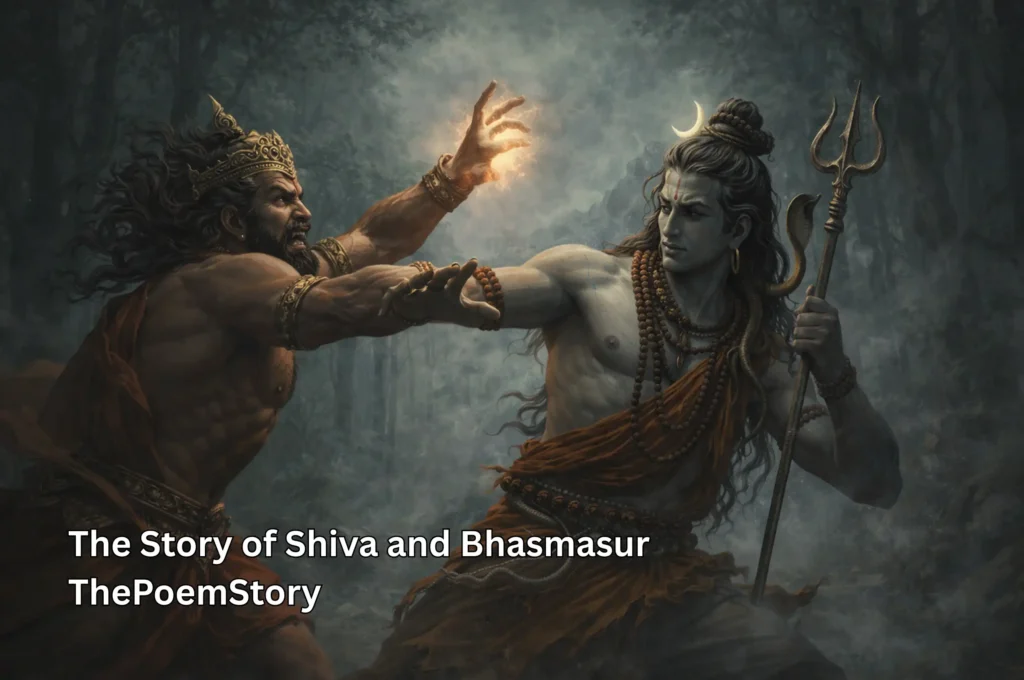
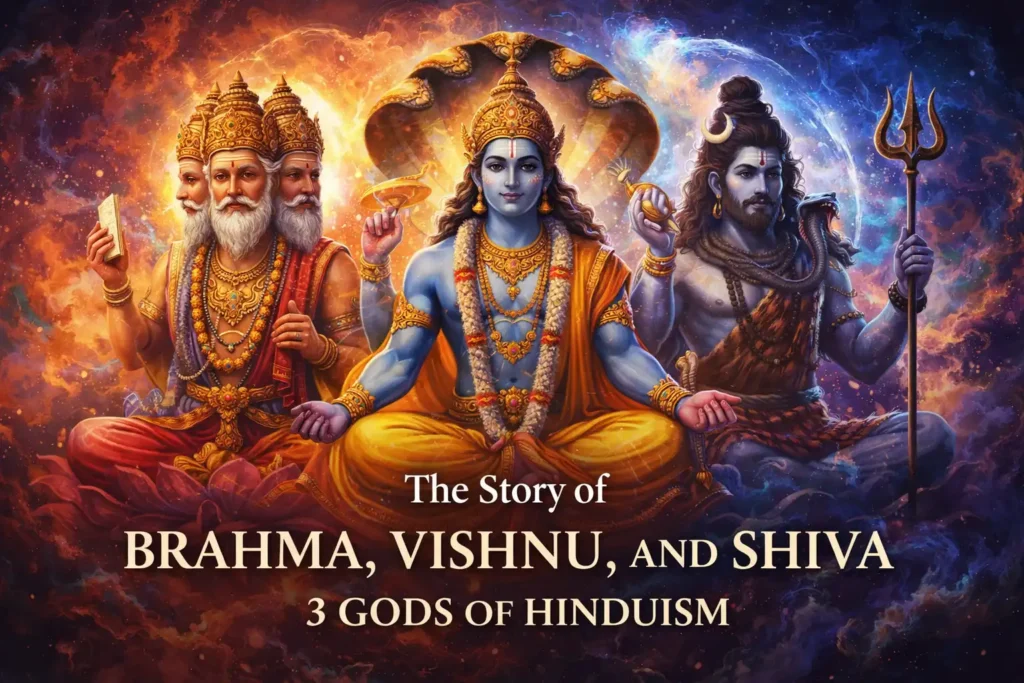
The Story of Shiva and Bhasmasur
In the silence of ancient forests, long before temples had walls and stories were written down, there lived an asura named Bhasmasur. He was not born powerful; he chose power. To him, strength was not inherited or gifted—it was earned through suffering. Leaving the world behind, he withdrew into isolation and began severe penance beneath the open sky. Days turned into months, months into years. He stood unmoving, slept on stone, and survived on almost nothing. His body weakened steadily, but his will did not. Every breath became a prayer, every drop of sweat an offering.
At last, his devotion shook the universe itself. Shiva appeared before him—not as a king, not as a judge, but as the calm presence that listens even to those who should not be trusted. Shiva asked him to name his boon. Bhasmasur did not ask for kingdoms or immortality. He asked for destruction. He demanded that anyone whose head he touched should instantly turn to ashes. Even the gods fell silent at the weight of this request.
Shiva understood the danger of such a gift. Yet Shiva is bound by a law greater than caution: sincere devotion is never denied. And so, the boon was granted.
The moment power settled into Bhasmasur’s hands, devotion vanished. Power intoxicates faster than wine. He laughed and tested his boon—on a tree, on stone—watching them turn to ash. His confidence grew rapidly, and with it, his arrogance. Then a thought crossed his mind, a thought that should never be entertained. If this power worked on everyone, would it work on Shiva himself?
Blinded by his own strength, Bhasmasur pursued Shiva. For the first time, the destroyer ran—not out of fear, but because even destruction must obey balance. Shiva fled across forests, mountains, and skies, seeking a way to undo a mistake born of compassion.
That is when illusion entered the story.
Mohini appeared, not with weapons or anger, but with beauty, grace, and irresistible charm. Bhasmasur stopped. Power had made him reckless, but desire made him foolish. Mohini spoke softly, laughed lightly, and began to dance. She asked him to follow her movements—hand to the side, step forward, turn, smile. Without thought, Bhasmasur mirrored her every gesture.
Then Mohini gently placed her hand upon her own head.
Without hesitation, without reflection, Bhasmasur did the same.
The power he had begged for turned inward. In a single instant, he became what he had made others.
Ash.
Silence returned to the world, and balance was restored. The lesson was complete.
A Final Reflection: Are Humans the Same as Bhasmasur?
When we look at the story closely, Bhasmasur does not feel distant or mythical anymore. He feels familiar. The Mohini in the story is not merely a divine figure—it is Maya, illusion itself. Maya does not attack, threaten, or force. It invites. It distracts. It makes destruction feel graceful. Mohini asks Bhasmasur to dance, to imitate, to follow without thinking. And when the moment comes, she asks him to place his hand upon his own head.
He obeys.
In our time, Maya appears differently. It takes the form of endless desire, unchecked ambition, constant comparison, and the belief that more is always necessary. It asks us to keep moving, keep chasing, keep proving. And slowly, subtly, it asks us to do what we already know is harmful—to ignore rest, silence conscience, abandon balance. Like Bhasmasur, no one forces our hand. We place it there ourselves.
The difference is only in speed. Bhasmasur turned to ashes in an instant. Humans burn slowly—through habits, excess, and choices repeated daily. The story endures because it is not about an asura’s fall; it is about a pattern that repeats whenever power grows faster than wisdom. In that sense, the question is no longer whether humans are like Bhasmasur—but whether we will recognize Maya before the damage is complete.

Get the ThePoemStory App — Read Poems Anywhere