Robert Frost stands as one of the colossal figures of 20th-century American poetry. Known for his accessible yet profoundly layered verses, Frost often employed the rural landscapes of New England as a canvas for exploring the deepest crevices of the human psyche. While his later works, such as “The Road Not Taken” and “Stopping by Woods on a Snowy Evening,” cemented his place in the public consciousness, it is in his early collections that we find the raw, unpolished seeds of his genius.
This Wind and Window Flower by Robert Frost analysis examines one of the most delicate and poignant poems from his debut collection, A Boy’s Will (1913). “Wind and Window Flower” is a lyrical narrative that tells the bittersweet story of a winter breeze who falls in love with a window flower. Yet beneath its charming surface lies a profound meditation on longing, connection, and the impossibility of love between two fundamentally different beings.
The poem presents a gentle drama: a winter wind, concerned with ice and snow, passes by a window where a flower sits in warmth and light. He is drawn to her beauty, returns at night, and tries to win her for flight. But the flower leans aside, thinking of nothing to say, and by morning the breeze is “a hundred miles away.” The poem is a quiet tragedy—a story of love that cannot be, of connection that is always just out of reach.
In this comprehensive guide, we will dissect “Wind and Window Flower” with careful attention to its structure, language, and emotional resonance. We will provide a detailed Wind and Window Flower poem summary, explore the profound themes in Wind and Window Flower by Robert Frost, examine its masterful literary devices in Wind and Window Flower, and ultimately reflect on the Wind and Window Flower meaning and what it reveals about the human experience of longing, love, and loss.
Read and explore ThePoemStory and go through Collected Poems of Robert Frost.
for more poems explore Poetry Section
Table of Contents
The Poem – Wind and Window Flower by Robert Frost
Lovers, forget your love,
~ Wind and Window Flower by Robert Frost – Analysis and Summary
And list to the love of these,
She a window flower,
And he a winter breeze.
When the frosty window veil
Was melted down at noon,
And the cagèd yellow bird
Hung over her in tune,
He marked her through the pane,
He could not help but mark,
And only passed her by,
To come again at dark.
He was a winter wind,
Concerned with ice and snow.
Dead weeds and unmated birds,
And little of love could know.
But he sighed upon the sill,
He gave the sash a shake,
As witness all within
Who lay that night awake.
Perchance he half prevailed
To win her for the flight
From the firelit looking-glass
And warm stove-window light.
But the flower leaned aside
And thought of naught to say,
And morning found the breeze
A hundred miles away.
Wind and Window Flower Poem Summary
Before delving into the thematic and literary depths, it is essential to establish a clear Wind and Window Flower poem summary to ensure every reader grasps the narrative and emotional arc of this delicate lyric. The poem is structured in eight stanzas of four lines each (quatrains), with a consistent ABAB rhyme scheme that gives it a gentle, musical quality.
Stanza 1: The Invitation
The poem opens with a direct address to lovers: “Lovers, forget your love, / And list to the love of these.” The speaker asks human lovers to set aside their own romantic concerns and listen instead to the love story of “these”—a window flower and a winter breeze. This opening establishes the poem as a kind of fable or parable, a lesson in the nature of love.
The “she” is a window flower—a plant growing indoors, perhaps in a pot on a windowsill. The “he” is a winter breeze—cold, transient, and wild. Already, we sense the impossibility of their union.
Stanza 2: The Setting
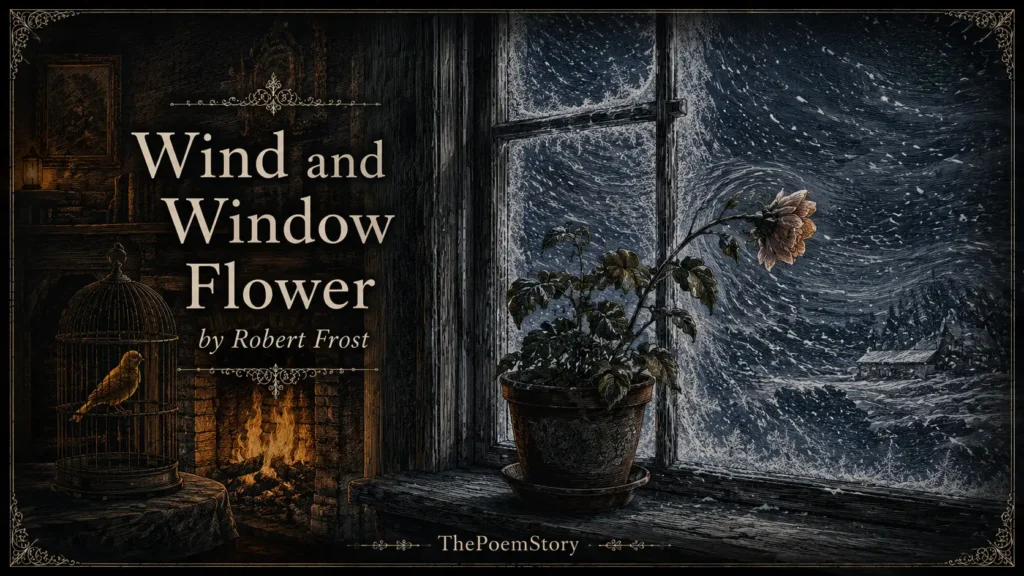
The second stanza describes the scene: “When the frosty window veil / Was melted down at noon.” The frost on the window has melted, allowing the breeze to see inside. A “cagèd yellow bird” hangs over the flower, singing “in tune.” The bird is in a cage, just as the flower is confined to the window. Both are trapped, but both are also warm and safe.
Stanza 3: The First Glance
The breeze “marked her through the pane”—he noticed her, observed her beauty. “He could not help but mark.” He is drawn to her. But he does not stop. He “only passed her by, / To come again at dark.” He is not yet ready to act. He will return when the light is gone.
Stanza 4: The Nature of the Breeze
Stanza 4 reveals the breeze’s nature. He is “a winter wind, / Concerned with ice and snow.” He is cold, harsh, and wild. He is associated with “dead weeds and unmated birds”—things that are lifeless or alone. He “little of love could know.” He is not a creature of warmth or tenderness. He is a creature of winter.
Stanza 5: The Sigh
Despite his nature, the breeze “sighed upon the sill.” He is moved. He “gave the sash a shake,” rattling the window frame. The people inside the house witness this—”As witness all within / Who lay that night awake.” The sigh and the shake are expressions of longing, of desire, of love.
Stanza 6: The Attempt
“Perchance he half prevailed / To win her for the flight / From the firelit looking-glass / And warm stove-window light.” The breeze tries to persuade the flower to leave with him. He wants to take her away from the warmth and safety of the window, from the “firelit looking-glass” and the “warm stove-window light.” He wants her to fly with him into the wild, cold world.
Stanza 7: The Refusal
But the flower “leaned aside / And thought of naught to say.” She does not respond. She turns away. She has nothing to say. She does not reject him cruelly; she simply cannot respond. She is rooted. She is a flower. She cannot leave.
Stanza 8: The Departure
The final stanza delivers the poem’s quiet, heartbreaking conclusion: “And morning found the breeze / A hundred miles away.” By morning, the breeze is gone—far away, unreachable. The flower remains at the window. Their brief encounter is over. The love that could not be has ended.
This completes our Wind and Window Flower poem summary, revealing a poem about impossible love, longing, and the bittersweet beauty of connection that cannot last.
Major Themes in Wind and Window Flower by Robert Frost
Now that we have a clear understanding of the narrative, let us examine the profound themes in Wind and Window Flower by Robert Frost. This seemingly simple love story contains layers of psychological and philosophical insight.
1. Impossible Love
The central theme of the poem is impossible love. The wind and the flower are fundamentally incompatible. The wind is wild, cold, and transient. The flower is rooted, warm, and stationary. They cannot be together. The breeze cannot stay, and the flower cannot leave. Their love is doomed from the start.
This theme reflects the human experience of loving someone we cannot have. We have all felt the pull of attraction to someone who is fundamentally different, someone we cannot be with. The poem captures this longing with grace and tenderness.
2. The Pull Between Safety and Freedom
The breeze wants the flower to leave the safety of the window and join him in the wild, cold world. The flower chooses to stay. This is a tension between safety and freedom, between the known and the unknown. The flower is safe but confined. The breeze is free but cold. Neither choice is perfect.
This theme invites us to consider our own choices. Do we choose safety or freedom? Do we stay in our comfortable windows or risk the wild wind? The poem does not judge either choice; it simply presents them.
3. The Transience of Connection
The breeze appears, sighs, shakes the sash, and then departs. The brief connection is over by morning. The poem captures the fleeting nature of human encounters—the moments of connection that come and go, that touch us and then disappear.
This theme is bittersweet. There is beauty in the brief encounter, but there is also sadness. The breeze is “a hundred miles away,” and the flower is left alone. The connection is gone, but its memory remains.
4. The Limitations of Understanding
The breeze “little of love could know.” He is concerned with ice and snow, dead weeds and unmated birds. He does not understand love. Yet he feels it. This paradox—feeling something we do not understand—is central to the human experience of love.
The flower also fails to understand. She “thought of naught to say.” She cannot respond because she does not know how. Both characters are limited by their natures. They feel, but they cannot fully comprehend or act on their feelings.
5. The Role of Witnesses
The people inside the house witness the breeze’s sigh and shake—”As witness all within / Who lay that night awake.” The love story is observed by others who cannot intervene. This theme speaks to the public nature of private longing. Others see our desires, even if they cannot help us fulfill them.
6. Nature as Metaphor for Human Emotion
The poem uses the natural world as a metaphor for human emotion. The wind represents desire, longing, and the restless urge to connect. The flower represents rootedness, stability, and the fear of change. The frost represents barriers that melt. The caged bird represents the desire to sing despite confinement. Frost uses these natural images to explore complex human feelings.
7. The Beauty of What Cannot Be
The poem finds beauty in the impossible. The breeze’s sigh, the flower’s leaning aside, the morning departure—these are all sad, but they are also beautiful. The poem suggests that love, even when it cannot be fulfilled, is still valuable. The longing itself is a kind of beauty.
Literary Devices in Wind and Window Flower
To fully appreciate the craftsmanship of this poem, we must examine the rich array of literary devices in Wind and Window Flower. Frost employs these techniques with his characteristic subtlety and precision, creating a poem that is both simple and profoundly moving.
1. Personification
The central device of the poem is personification. The wind and the flower are given human qualities. The breeze “marks,” “sighs,” and “prevails.” The flower “leaned aside” and “thought of naught to say.” This personification allows Frost to explore human emotions through the lens of nature.
2. Imagery
Frost’s imagery in this poem is delicate and evocative:
- Visual: “frosty window veil,” “cagèd yellow bird,” “firelit looking-glass,” “warm stove-window light.”
- Auditory: “list,” “sighed,” “gave the sash a shake.”
- Tactile: “warm,” “cold,” “breeze.”
- Thermal: “frosty,” “melted,” “firelit,” “warm.”
The imagery consistently contrasts warmth and cold, light and dark, inside and outside.
3. Symbolism
Several symbols enrich the poem’s meaning:
- The Window Flower: Represents rootedness, safety, warmth, and the fear of leaving the known.
- The Winter Breeze: Represents desire, longing, freedom, and the restless urge to connect.
- The Frosty Window Veil: Represents the barriers that separate us from each other.
- The Cagèd Yellow Bird: Represents the desire to sing and express oneself despite confinement.
- The Firelit Looking-Glass: Represents self-reflection and the comfort of the familiar.
- Night and Morning: Represent the passage of time and the fleeting nature of connection.
4. Tone
The tone of the poem is gentle, wistful, and bittersweet. There is no anger or bitterness. The speaker observes the love story with a kind of tender sadness. The tone reflects Frost’s characteristic restraint—the emotions are real, but they are expressed with understated grace.
5. Rhyme and Meter
The poem follows a consistent ABAB rhyme scheme in each quatrain. The meter is predominantly iambic, with variations that reflect the speaker’s contemplative mood. The regular rhythm creates a sense of calm and musicality, even as the poem explores themes of longing and loss.
6. Apostrophe
The poem opens with an apostrophe—a direct address to an absent or imagined listener: “Lovers, forget your love.” This rhetorical device immediately engages the reader and establishes the poem as a kind of lesson or parable.
7. Paradox
There is a subtle paradox in the poem. The breeze “little of love could know,” yet he sighs and shakes the sash. He feels love but cannot understand it. This paradox reflects the human experience of feeling things we cannot fully comprehend.
8. Understatement
The poem’s conclusion is a masterful use of understatement: “And morning found the breeze / A hundred miles away.” This simple statement carries enormous emotional weight. The breeze is gone. The encounter is over. The understatement makes the loss feel even more profound.
The Deeper Meaning of Wind and Window Flower
Beyond its surface-level narrative, the Wind and Window Flower meaning reveals a profound meditation on the nature of love, longing, and the impossibility of connection between fundamentally different beings. This is where the poem transcends its historical context and speaks directly to the human condition.
The Wind and Window Flower meaning centers on the recognition that love often arises between beings who cannot be together. The wind and the flower are drawn to each other, but their natures make union impossible. The wind cannot stay; the flower cannot leave. Their love is a moment of connection that cannot be sustained.
This theme resonates with the human experience of loving someone who is fundamentally different from us. We may be drawn to someone who is wild while we are rooted, or to someone who is safe while we are restless. The poem captures the beauty and the pain of these impossible connections.
The Wind and Window Flower meaning also speaks to the tension between safety and freedom. The flower chooses the “firelit looking-glass / And warm stove-window light.” She chooses safety, comfort, and the known. The breeze offers freedom, wildness, and the unknown. The poem does not judge her choice. It simply observes it with compassion.
The “cagèd yellow bird” is a key image. The bird sings in its cage, just as the flower blooms in its window. Both are confined, but both find a way to express themselves. This suggests that confinement does not necessarily mean silence or death. We can still sing, still bloom, even within our limits.
Ultimately, the Wind and Window Flower meaning is that love is not always about possession or union. Sometimes love is about a brief moment of connection that transforms us, even if it cannot last. The breeze’s sigh, the flower’s leaning aside—these are small gestures, but they are gestures of love. The poem teaches us to value these moments, even when they are fleeting.
Reflection on Human Life
“Wind and Window Flower” offers a timeless mirror to the human condition, and its relevance only grows in our modern world of fleeting connections and impossible longings.
The Beauty of Impossible Love
The poem celebrates the beauty of impossible love. The wind and the flower cannot be together, but their brief encounter is still meaningful. The breeze sighs, the flower leans aside, and the memory of their connection remains. The poem suggests that love does not have to be fulfilled to be valuable. The longing itself is a kind of beauty.
The Choice Between Safety and Freedom
We all face the choice between safety and freedom. The flower chooses safety. She stays at the window, in the warmth, in the light. The breeze chooses freedom. He roams the winter landscape, concerned with ice and snow. Neither choice is wrong. The poem simply presents the choice and its consequences.
This theme invites us to consider our own choices. Do we stay in our comfortable windows or risk the wild wind? There is no single right answer. The poem respects our freedom to choose.
The Fragility of Connection
The breeze is “a hundred miles away” by morning. The connection is gone. This theme reminds us of the fragility of human connections. We meet people, we connect, and then we part. The memory remains, but the presence is lost. The poem invites us to cherish these brief moments of connection.
The Power of Small Gestures
The breeze does not declare his love in grand terms. He sighs upon the sill and gives the sash a shake. These are small gestures, but they are full of meaning. The poem reminds us that love is often expressed in small, quiet ways. A sigh, a glance, a moment of attention—these are the gestures that matter.
The Wisdom of the Flower’s Silence
The flower “thought of naught to say.” She does not reject the breeze cruelly. She simply has nothing to say. Sometimes, silence is the most honest response. We do not always have words for our feelings. The poem honors the flower’s silence as a form of wisdom.
The Acceptance of Loss
The poem ends with loss. The breeze is gone. The flower remains. There is no happy ending. But there is acceptance. The poem does not rage against the loss; it simply observes it. This acceptance is a form of wisdom—a recognition that loss is part of life, and that we can find peace in accepting it.
Conclusion
“Wind and Window Flower” is a quiet masterpiece of early Frost—a poem that rewards careful reading and deep reflection. It is a meditation on impossible love, the tension between safety and freedom, and the beauty of fleeting connections. Through its delicate imagery, its gentle rhythm, and its bittersweet conclusion, the poem invites us to cherish the brief moments of connection that touch our lives.
Through our Wind and Window Flower by Robert Frost analysis, we have explored the poem’s structure, its Wind and Window Flower poem summary, the profound themes in Wind and Window Flower by Robert Frost, the masterful literary devices in Wind and Window Flower, and the enduring Wind and Window Flower meaning.
“Wind and Window Flower” does not offer grand solutions or happy endings. It offers something more valuable: a gentle acknowledgment of the beauty and pain of impossible love. The breeze sighs, the flower leans aside, and morning comes. The connection is gone, but its memory remains. The poem teaches us to value these moments, even when they cannot last.
If you have ever loved someone you could not have, felt the pull of connection and the pain of parting, then you have stood with the breeze at the window. And like him, you have felt the sigh of longing and the ache of distance.
Enjoyed this deep dive into Frost’s poetry? If you want to explore more of his work, consider adding a complete collection to your library. There is no better companion for a quiet evening than the timeless verses of Robert Frost.
Did this analysis illuminate a new perspective on “Wind and Window Flower” for you? Drop a comment below and let me know your thoughts. If you found this valuable, please share it with a fellow poetry enthusiast!
Read and explore ThePoemStory and go through Collected Poems of Robert Frost.
for more poems explore Poetry Section

Get the ThePoemStory App — Read Poems Anywhere