The Story of the Monkey King from Jataka Tales: The Wise Leader Who Foresaw Disaster
A timeless tale of wisdom and the consequences of ignoring good counsel from the Buddha Jataka Tales, exploring the depths of Jataka Stories Buddhism, the profound lessons of the Buddha Life Story, and the transformative power of ancient Buddhist Stories.
Introduction: The Wise Monkey King
The Story of the Monkey King from Jataka Tales is a powerful tale of wisdom, foresight, and the tragic consequences of ignoring good counsel. The Story of the Monkey King from Jataka Tales recounts the Bodhisatta’s birth as the king of a troop of monkeys living in a royal orchard, who foresaw danger and tried to protect his followers. The Story of the Monkey King from Jataka Tales illustrates the importance of heeding wise advice and the dangers of pride.
This tale is unique in its portrayal of a leader who recognized danger before it arrived. The Story of the Monkey King from Jataka Tales shows that wisdom is the ability to see beyond the present moment. Those who ignore wise counsel often pay a heavy price. As we journey through The Story of the Monkey King from Jataka Tales, we discover that pride and stubbornness can lead to destruction.
Table of Contents
The Story of the Monkey King from Jataka Tales
The Royal Orchard
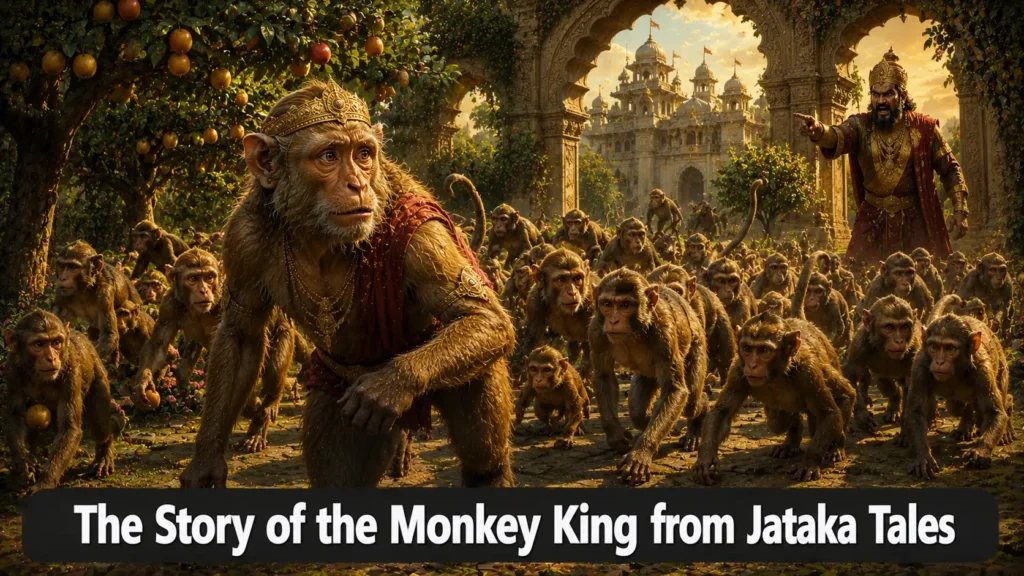
Once upon a time, in a royal orchard belonging to a great king, there lived many monkeys. The Story of the Monkey King from Jataka Tales centres on these creatures who had made the lush park their home. Among them was their wise king—the Bodhisatta—who led them with compassion and foresight.
The orchard was a paradise. Fruit trees of every variety grew in abundance, providing the monkeys with all the food they could desire. The trees offered shade from the hot sun and shelter from the rain. The Story of the Monkey King from Jataka Tales shows the monkeys living in peace and contentment under their wise king’s leadership.
But the peace of the orchard was fragile. The monkeys were surrounded by humans who did not always appreciate their presence. The Story of the Monkey King from Jataka Tales reveals that danger can lurk even in the most pleasant surroundings. The wise monkey king was always watchful, always aware of potential threats. A good leader is always vigilant.
The Chaplain’s Humiliation
One day, the chief priest of the kingdom was passing through the royal park after having taken his bath. The Story of the Monkey King from Jataka Tales reveals the priest’s piety and self-importance. He walked through the orchard with dignity, expecting to be treated with respect. But the monkeys had other ideas.
A naughty monkey, sitting on the arch of the gateway, looked down upon the priest. Seized by mischief, the monkey pooed on the priest’s head. The priest was baffled and humiliated. He looked all over, trying to understand what had happened. As he turned his eyes upward with his mouth gaping open in shock, the monkey voided in his mouth.
Infuriated, the priest swore vengeance on all the monkeys. His anger burned hot, and his pride would not allow him to forget the insult. The Story of the Monkey King from Jataka Tales shows that wounded pride can lead to terrible acts of revenge.
The Monkey King’s Warning
The wise monkey king, observing the entire scene from a distance, was deeply alarmed. The Story of the Monkey King from Jataka Tales reveals his understanding of human nature. He knew that a man of power who had been humiliated would not rest until he had taken revenge. Wisdom involves understanding the consequences of actions.
He called all his followers together. “My friends,” he said, “we must leave this place at once. The priest has been humiliated by one of our kind. He will not forget this insult. He will seek revenge against all of us. We must flee to safety before it is too late.”
The wise monkey king did not wait. He immediately began to lead his followers out of the orchard. He knew that hesitation could be fatal. A wise leader acts quickly when danger threatens. Many monkeys followed their king. They trusted his wisdom and obeyed his command. The Story of the Monkey King from Jataka Tales shows that wise followers recognize the value of good counsel.
The Stubborn Followers
Among the monkeys was one haughty monkey who refused to listen to the wise king’s advice. The Story of the Monkey King from Jataka Tales reveals his arrogance. He thought he knew better than his king. He was proud, stubborn, and filled with self-importance. Pride blinds us to the truth.
“Why should we flee?” the haughty monkey declared. “The priest is just a human. He cannot harm us in our own home. The king is being foolish. We should stay and enjoy the orchard.”
He gathered five hundred followers who were swayed by his confidence. His followers were seduced by his arrogance and false confidence. False leaders can lead others to destruction. They ignored the wise king’s warning and remained in the orchard. The Story of the Monkey King from Jataka Tales shows that pride often leads to downfall.
The Chain of Events
By and by, a series of events unfolded that would lead to the monkeys’ doom. The Story of the Monkey King from Jataka Tales reveals the chain of cause and effect. One day, a female slave of the royal palace was drying some rice in the sun. A sheep slipped into the place to eat the rice.
Angry at the sheep, the slave girl hurled a burning stick at the animal. The stick hit the sheep’s fur, setting it on fire. The sheep, terrified and in pain, ran to the elephants’ stall. The elephants’ stall caught fire, and the flames spread quickly. Several royal elephants sustained burnt injuries.
The king was furious. The royal elephants were precious, and their injuries were a great loss. The consequences of our actions can spiral far beyond our intentions. The king summoned the chaplain and sought his advice. He believed that the priest would have a solution to his problem.
The Chaplain’s Revenge
The chaplain, who was the sworn enemy of the monkeys, saw his opportunity for revenge. The Story of the Monkey King from Jataka Tales reveals his malicious heart. He had waited for this moment—a chance to destroy those who had humiliated him. Revenge is a poison that consumes those who harbor it.
“Great king,” the chaplain said, “I know the best remedy for burnt injuries on elephants. The application of monkey-fat is the most efficacious treatment. If you kill the monkeys living in the park and bring their fat, your elephants will be healed.”
The king, trusting his chaplain, did not question his advice. He had no reason to suspect that the chaplain was using his position for personal revenge. We must be cautious about whom we trust. The king ordered the royal archers to kill all the monkeys living in the park and bring their fats.
The Tragic End
The royal archers descended upon the orchard. The Story of the Monkey King from Jataka Tales reveals the horror of the attack. The monkeys who had ignored the wise king’s warning were trapped. They had nowhere to run, nowhere to hide. The archers shot them down mercilessly.
The haughty monkey and his five hundred followers perished. They had been given a chance to escape, but their pride had prevented them from taking it. Stubbornness can lead to destruction. All those monkeys who had ignored the advice of the wise monkey perished. They had chosen pride over wisdom, and their choice had cost them their lives.
The wise monkey king, who had led his followers to safety, mourned the loss of those who had refused to listen. Even though they had ignored his advice, he still grieved for them. A wise leader cares for all, even those who reject their guidance.
Thus, The Story of the Monkey King from Jataka Tales concludes with a powerful lesson: wisdom is only valuable if we are willing to follow it. Pride and stubbornness can lead to our downfall. We must be humble enough to accept good counsel.
Moral of the Story: The Wisdom of Heeding Good Counsel
The Story of the Monkey King from Jataka Tales is a profound teaching on the importance of heeding wise counsel and the dangers of pride and stubbornness. It illustrates how arrogance can blind us to the truth and lead to our destruction. The wise monkey king saw the danger and tried to protect his followers, but some refused to listen.
In Buddhist philosophy, humility is a virtue that opens the heart to wisdom. Those who are humble enough to accept good counsel are protected from harm. The monkeys who followed the wise king survived. The monkeys who trusted their own pride perished.
The chaplain’s revenge is a warning about the dangers of wounded pride. Pride can turn a holy man into a vengeful enemy. The chaplain allowed his humiliation to consume him, and his desire for revenge led to the deaths of innocent beings. We must be careful not to let our pride control us.
The chain of events—from the monkey’s mischief to the slave girl’s anger to the chaplain’s revenge—illustrates the law of cause and effect. Our actions have consequences, often far beyond what we intend. A thoughtless act can set in motion a chain of events that leads to great suffering.
This Jataka also teaches the importance of foresight. The wise monkey king recognized the danger and acted quickly. Wise leaders are able to anticipate problems and take preventive action. Foresight is a mark of true wisdom.
In our own lives, The Story of the Monkey King from Jataka Tales invites us to examine our own responses to wise counsel. Do we listen to those who have wisdom and experience? Or do we let our pride prevent us from accepting good advice? Humility is not weakness—it is the foundation of wisdom.
By exploring The Story of the Monkey King from Jataka Tales, we gain timeless wisdom about the importance of heeding good counsel and the dangers of pride. It guides us toward a life of humility, wisdom, and openness to the guidance of those who know more than we do.
In our world of pride and stubbornness, The Story of the Monkey King from Jataka Tales invites us to examine our willingness to accept wise counsel. By exploring this ancient tale, we gain timeless wisdom about the importance of humility and the dangers of ignoring good advice.
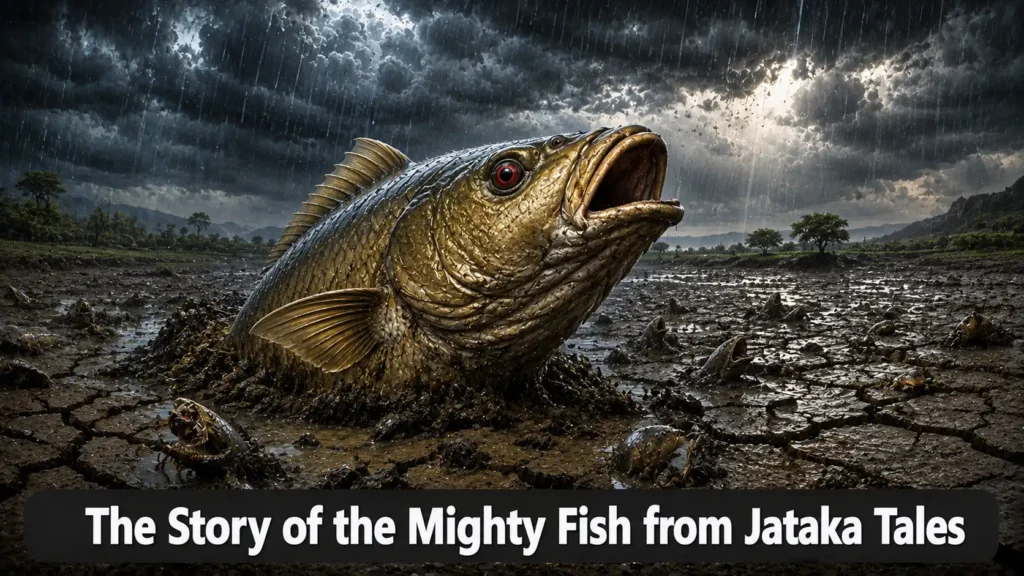
Read the previous story: The Story of the Mighty Fish from Jataka Tales – The Compassionate Fish Who Called the Rains

Get the ThePoemStory App — Read Poems Anywhere